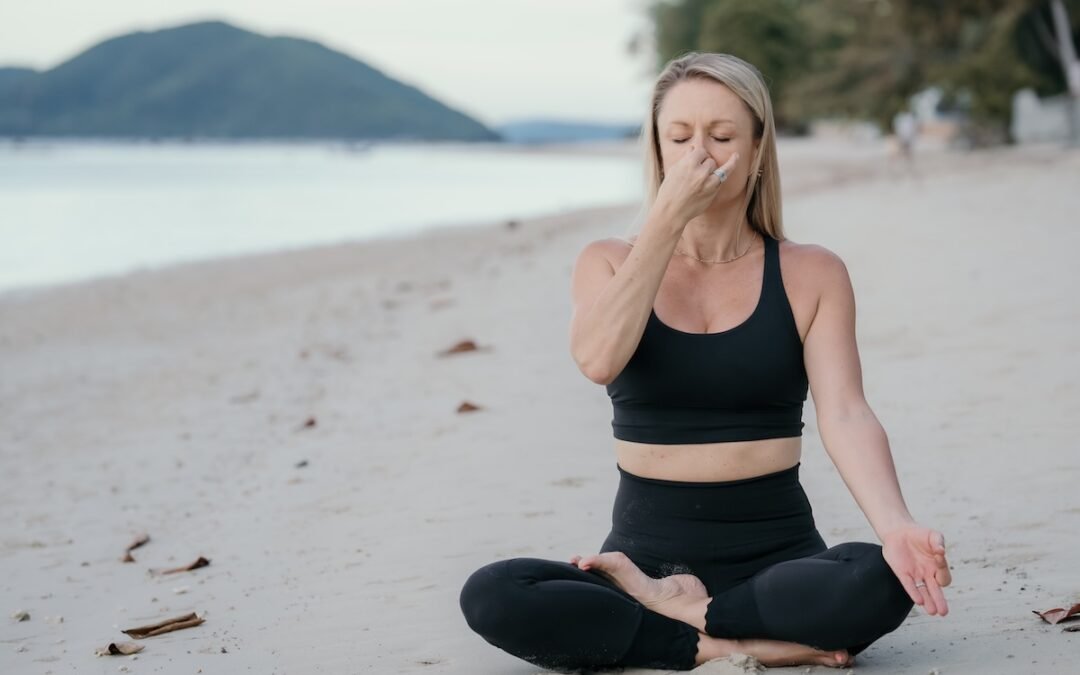
Why is it necessary to interrupt the natural process of breathing?
If you are stressed, scared, upset or angry, one of the body’s most obvious physical symptoms is an immediately heightened breath response. When the mind is disturbed, the breath is disturbed, so…
“if you want to tackle the mind, you must tackle the breath”
– Sri OP Tiwariji
Mindfulness techniques have become very popular in today’s overstressed, ‘busy-centric’ culture, but in truth asking the mind to be still is an advanced practice indeed. However, by using the breath as an access point, we are able to more easily teach the body to move from sympathetic response (‘fight or flight’) to parasympathetic response (‘rest and digest’), thereby literally teaching the body and mind to choose a calmer path during times of stress.
My breathwork clients report better sleep, calmer reactions to life’s stressors and increased awareness of stress responses allowing greater harmony in both work and family life. A few minutes of peace each day also sets them up to be more productive overall.
–
The ability to shift stress responses will improve many mental & physical health problems and feelings of anxiety. However, it also provides us with the perfect landscape to experience glimpses of stillness in the mind, and those glimpses are the beginnings of greater internal awareness & eventually meditation.
Later, we slowly approach more advanced techniques of pranayama that can transport established practitioners towards deeper levels of internal awareness: control the breath to better control your mind.
What is Pranayama?
In one of the seminal texts on yoga, The Yoga Sutras of Patanjali, we learn in the second phrase:
“Yogas citta vrtti nirodhah”
– Patanjali’s Yoga Sutra (1:2)
This means that the purpose of yoga is to calm the mind, eventually allowing stillness, or in other words to channel the fluctuations of the mind.
Once we accept that the movement of the breath is intricately linked to the movement of the mind, it follows that when you learn to control your breath, you can then begin to control the mind, to find stillness and to focus. Pranayama is more than a simple, deep-breathing exercise; it is training oneself to lengthen, stop, and control breath as a deeply therapeutic tool to bring about physical health, increased awareness, and calmness & clarity of mind.
“We go through the breath to channelize (nirodahah) the behavior of the mind (citta vrtti)”
– Sri O.P Tiwari
Whether you are an inquisitive beginner who wants to manage stress or to sleep better, or you have worked with the breath in some way before and want to learn more, see available courses below.